First-hand contract in Sweden 2026: how the housing queue works
What a förstahandskontrakt is, how queue days are earned and lost, what landlords check besides the queue, and the rules that make a second-hand flat legal while you wait.
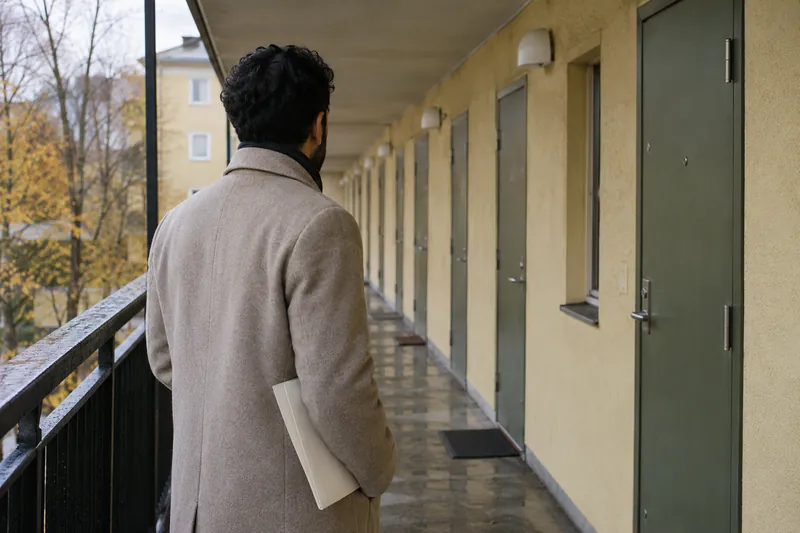
The advert says one room and a kitchen in Hägersten, 8 400 kr a month, first-hand contract. You click apply and the site asks how many queue days you have. You registered last week, so the answer is seven. This is the part of Swedish housing nobody explains on arrival: the queue is not a waiting list you join once, it is an account you fund every year.
What a first-hand contract actually is
A förstahandskontrakt is a lease signed directly with the person who owns the building: a municipal housing company, a private landlord, a foundation. It normally runs tills vidare, with no end date, and it can only be ended for reasons set out in law.
That is the whole difference. A second-hand tenant borrows the flat for a fixed period from someone who holds the real contract. An inneboende rents a room in a home where somebody else lives. Both are legal; neither gives you a home you can keep.
The rent on a first-hand contract is also set collectively rather than by the market, which is why the queue exists at all. Demand at that rent is far larger than supply, and queue time is the rationing device.
| First hand | Second hand | Inneboende | |
|---|---|---|---|
| Contract with | The landlord | The person who holds the lease | The person who lives there |
| Length | Usually no end date | Fixed period, permission-bound | Fixed period |
| Permission needed | No | Yes, written, or hyresnämnden | Not for a room let out |
| Rent | Set collectively | Must be reasonable; hyresnämnden can test it | Share of costs |
| Queue time | Reset when you sign | Keeps running | Keeps running |
How queue days are earned, and how they disappear
You register with the municipal housing agency of the region you want to live in. In Stockholm that is Bostadsförmedlingen; other cities run their own, and some landlords keep private queues on top.
Registration in Stockholm opens the day you turn 18, and you need a Swedish personnummer or a samordningsnummer to sign up. Younger applicants can register if they have children or can show a pregnancy.
From that day you collect one queue day per day, for 200 kr a year. Pay late and the account is suspended: existing applications are dropped and you cannot make new ones. Let it run five months past the due date and you are deregistered, which resets everything.
The other reset is the happy one. When you sign a first-hand contract for an ordinary flat through the agency, your queue time goes back to zero and you start again from the day you sign.
- Get a personnummer or samordningsnummerRegistration in the Stockholm queue requires one of the two
- Register and pay 200 krOne queue day per day from the day you register
- Pay the fee every yearFive months late and you are deregistered
- Apply only where you meet the conditionsIncome, commuting distance, no payment defaults
- Viewing and offerQueue days decide the invitation, the landlord decides the contract
- Sign, and the queue resetsYour queue time starts again from that day
What the landlord checks besides your queue days
Queue days get you to the viewing. The landlord decides who signs. Bostadsförmedlingen is explicit that the conditions are set by each landlord and printed in each advert, so read them before you spend an application.
Three conditions come up again and again. Your income has to stand in proportion to the rent. If the income is from employment, the job has to be within commuting distance of the region. And you may not have betalningsanmärkningar or debts registered with Kronofogden.
Notice what is not on that list: nationality, and how long your residence permit runs. What is checked is money coming in and a clean payment record. A temporary permit is not itself a bar, though individual landlords ask for documents in their own way, so ask before the viewing rather than after.
A worked example. Nadia registered with Bostadsförmedlingen on 3 February 2021, four days after her personnummer arrived. She has paid 200 kr in six of the years since, 1 200 kr in total. On 31 August 2026 she holds 2 035 queue days, a little over five and a half years.
Whether 2 035 days is enough depends entirely on the flat. Bostadsförmedlingen publishes the queue time behind every mediated apartment, area by area and year by year; look up the districts you would actually accept before you decide that the queue is hopeless. For scale, Bostadsförmedlingen i Stockholm mediated 1 691 homes in July 2026 at an average queue time of 9.2 years. Check the current figures at bostad.stockholm.se/statistik.
- 3 February 2021RegistersFour days after the personnummer arrives
- 2021–2026Pays 200 kr six times1 200 kr in total
- 31 August 20262 035 queue daysJust over five and a half years
- The day she signsBack to zeroAnd a home with no end date
Second-hand while you wait: what makes it legal
Almost everyone arriving in Sweden starts in a second-hand flat, and there is nothing wrong with that as long as one document exists: written permission from the landlord, or from the bostadsrättsförening if the flat is a bostadsrätt. If permission is refused, the person letting the flat can apply to hyresnämnden for it.
Without that permission the first-hand tenant risks losing the flat, and you lose your home with it, usually at short notice and without the deposit.
The rent is regulated too, but which rule applies depends on the contract. A sublet of a rental flat is judged under chapter 12 of jordabalken. A home let inside the owner’s own villa, bostadsrätt or ägarlägenhet on a contract signed from 1 July 2026 falls under the new privatuthyrningslag instead. The signature date decides, not today’s date.
If the rent looks wrong, hyresnämnden can test it, and an application there is free of charge. Two numbers everyone asks for are not published anywhere: a supplement for furniture and services, and a ceiling on the deposit. Check both with hyresnämnden, and write into the contract what the deposit covers and when it comes back. Our separate article on first hand against second hand goes through the sublet rules in full.
- The written permissionFrom the landlord or the bostadsrättsförening, with dates
- Who holds the real contractAsk to see it; the name must match the person you pay
- What the rent is based onHyresnämnden can test a rent, and applying is free
- What the extras coverAsk what electricity, internet and parking are each based on
- Deposit in writingAmount, and how and when it comes back
- The queue fee reminderA calendar entry every year beats losing five years
What we do not know yet
The number everyone wants is the one that is hardest to state honestly: how many queue days a specific flat needs this year. It moves by area, by size, by whether the building is new production, and it moves every month. Any single figure in an article is out of date before it is published.
The same goes for landlord income conditions. Bostadsförmedlingen says income must be proportional to the rent, and does not publish one multiplier, because each landlord sets its own.
So use the sources rather than a number: the queue statistics for the areas you would accept, and the conditions printed on each individual advert. Both were checked on 31 August 2026.
Key facts
| Queue fee, Stockholm | 200 kr a year |
|---|---|
| Deregistered if unpaid | Five months after the due date; all queue time is lost |
| Minimum age to register | 18 (younger with children or a pregnancy certificate) |
| Identity number needed | Personnummer or samordningsnummer |
| Queue time after signing | Reset to zero when you sign a first-hand contract for an ordinary flat |
| Landlord conditions | Income proportional to the rent, work within commuting distance, no betalningsanmärkningar or Kronofogden debts |
| Average queue time, Stockholm | 9.2 years for the 1 691 homes mediated in July 2026 |
| Testing a rent or a refusal | An application to hyresnämnden is free of charge |
| Deposit ceiling | None published; agree in writing what it covers and when it returns |
| Permission to sublet | Written, from the landlord or the bostadsrättsförening; hyresnämnden if refused |
Questions, answered
How do I get a first-hand contract in Sweden?
Register with the municipal housing agency where you want to live, pay the annual fee, and apply for flats whose advert conditions you meet. Queue days decide who is called to the viewing; the landlord decides who signs.
Can I stand in the housing queue without a personnummer?
In Stockholm you need a personnummer or a samordningsnummer to register. A samordningsnummer is applied for at Skatteverket with an identity check at a service office.
How long is the queue in Stockholm?
The average was 9.2 years for the 1 691 homes Bostadsförmedlingen i Stockholm mediated in July 2026, but the spread by area, size and new production is wide. Check the current figures at bostad.stockholm.se/statistik.
Do I lose my queue time if I take a second-hand flat?
No. Queue time is only reset when you sign a first-hand contract for an ordinary flat through the agency. Living in a sublet changes nothing, as long as you keep paying the annual fee.
Is it legal to sublet without the landlord's permission?
No. Permission has to be written, from the landlord or from the bostadsrättsförening. Without it the first-hand tenant risks losing the flat, and the second-hand tenant loses the home.
What income do landlords require for a rental in Sweden?
Bostadsförmedlingen says the income must stand in proportion to the rent, and each landlord sets its own condition in the advert. There is no single national multiplier, so read the advert.
Official sources
Check the source for the requirements that apply to your situation.
- Bostadsförmedlingen i Stockholm – Avgift
- Bostadsförmedlingen i Stockholm – Kö- och förmedlingsregler
- Sveriges Domstolar / Hyresnämnden – Hyra i andra hand och nya regler sommaren 2026
Independent guidance. QuickSwedish is not affiliated with UHR or Migrationsverket.